
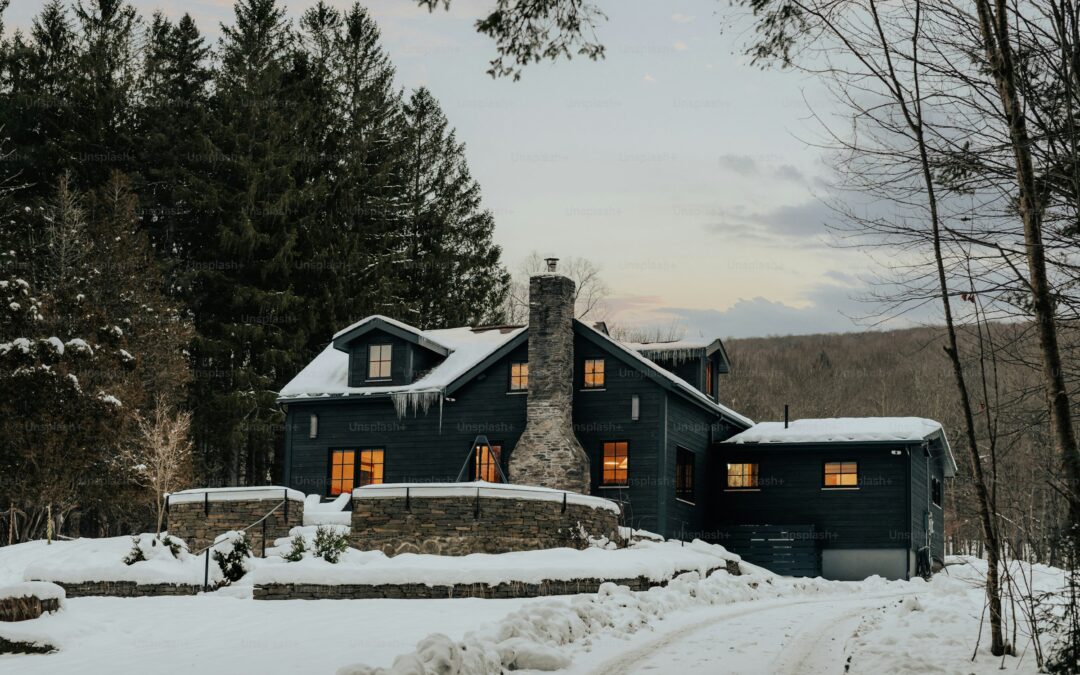
Maine winters have a way of revealing every weakness in a home. That draft curling around your ankles while you watch TV. The bedroom upstairs that never quite warms up. The heating bill that makes you wince every month from November through April.
Most homeowners chalk these things up to “just living in Maine.” But more often than not, they are signs that your home’s insulation is falling short. The good news is that these problems are fixable, and the solutions are more affordable than you might think, especially with Efficiency Maine rebates covering a significant portion of the cost.
Here are five telltale signs that your home could benefit from better insulation.
1. You Have Rooms That Are Always Too Hot or Too Cold
If your living room feels comfortable but the upstairs bedroom requires a space heater, or the kitchen is warm while the den stays chilly, that is a classic sign of uneven insulation. In an older Maine home, especially one built before modern energy codes, it is common for some walls or ceilings to have little or no insulation at all.
This is not a heating system problem. Your furnace or boiler may be working perfectly fine. The issue is that heat is escaping faster in some areas than others. Blown-in cellulose insulation can fill wall cavities, attic spaces, and other hard-to-reach areas without tearing open walls, bringing those cold rooms back into balance with the rest of the house.
2. Your Heating Bills Keep Climbing
With heating oil hovering around $4 a gallon in the Greater Portland area, nobody wants to burn more fuel than necessary. If your heating costs seem disproportionately high for the size of your home, or if they have been creeping up year after year even when fuel prices stay flat, poor insulation is a likely culprit.
Think of it this way: running your heating system in a poorly insulated home is like trying to fill a bathtub with the drain open. You can keep adding hot water, but it just keeps flowing out. Proper insulation closes that drain.
Homeowners in the Greater Portland area typically see a 20 to 40 percent reduction in heating costs after a comprehensive insulation upgrade. On a $3,000 annual heating bill, that translates to $600 to $1,200 back in your pocket every year.
3. You Feel Drafts, Even With the Windows Closed
Sit near an exterior wall on a cold January evening and hold your hand up. Do you feel cool air moving? That is infiltration, and it is one of the biggest comfort and energy problems in Maine homes.
Drafts usually point to gaps in the building envelope, the invisible boundary between your heated living space and the outdoors. Common culprits include gaps around electrical outlets on exterior walls, unsealed penetrations where pipes and wires pass through floors and ceilings, and open spaces around attic hatches and basement rim joists.
Air sealing works hand-in-hand with insulation to stop these drafts at their source. At Horizon Homes, our energy advisors do a thorough visual inspection of your entire home — attic, basement, walls, and every area in between — to identify exactly where air is getting in and heat is getting out. Our advisors have seen hundreds of Maine homes and know exactly what to look for.
4. You Get Ice Dams on Your Roof
If you have ever dealt with ice dams, those thick ridges of ice that form at the edge of your roof in winter, you know how destructive they can be. Water backs up behind the dam, seeps under shingles, and damages ceilings, walls, and insulation below.
But here is what many homeowners do not realize: ice dams are almost always an insulation and air sealing problem, not a roofing problem.
When heat escapes through a poorly insulated attic floor, it warms the roof deck above. Snow melts on the warm sections, runs down to the cold eaves where there is no heat loss, and refreezes into a dam. The solution is not raking your roof or installing heat cables. The solution is keeping that heat inside your living space where it belongs.
Properly insulating and air sealing your attic floor stops the heat from reaching the roof in the first place. No heat loss, no melting, no ice dams.
5. Your Walls or Floors Feel Cold to the Touch
Put your hand on an exterior wall in your home during a cold snap. In a well-insulated home, the interior surface of that wall should feel close to room temperature. If it feels noticeably cool, or even cold, heat is passing right through.
The same goes for floors above unheated spaces like garages, crawl spaces, or unfinished basements. If you find yourself wearing slippers all winter because the floors are cold, insulation is the answer.
Many Maine homes built in the 1950s through 1980s have wall cavities that are either empty or filled with thin fiberglass batts that have settled and compressed over the decades. Blown-in dense-pack cellulose fills every gap and void in the cavity, creating a continuous thermal barrier that fiberglass batts simply cannot match.
How to Know for Sure
The signs above are strong indicators, but the only way to know exactly what is happening inside your walls, attic, and basement is with a professional energy assessment. At Horizon Homes, our advisors do a thorough walk-through of your entire home — about an hour — checking every key area and identifying every opportunity for improvement. It’s a systematic, visual inspection by someone who knows exactly what to look for in Maine homes.
The result is a complete picture of your home’s performance, so any improvements we recommend are based on experience and evidence, not guesses.
Ready to Find Out Where Your Home Stands?
If any of these signs sound familiar, you are not stuck with a drafty, expensive-to-heat home. Horizon Homes has been helping homeowners across Greater Portland improve their comfort and cut their energy costs since 2006.
Schedule your free energy assessment and we will show you exactly where your home is losing energy, what it would take to fix it, and what Efficiency Maine rebates are available to help with the cost. No pressure, no obligation, just straightforward answers from people who know Maine homes inside and out.
Or give us a call at (207) 221-3221. We are happy to talk through what you are seeing and whether an assessment makes sense for your situation.