
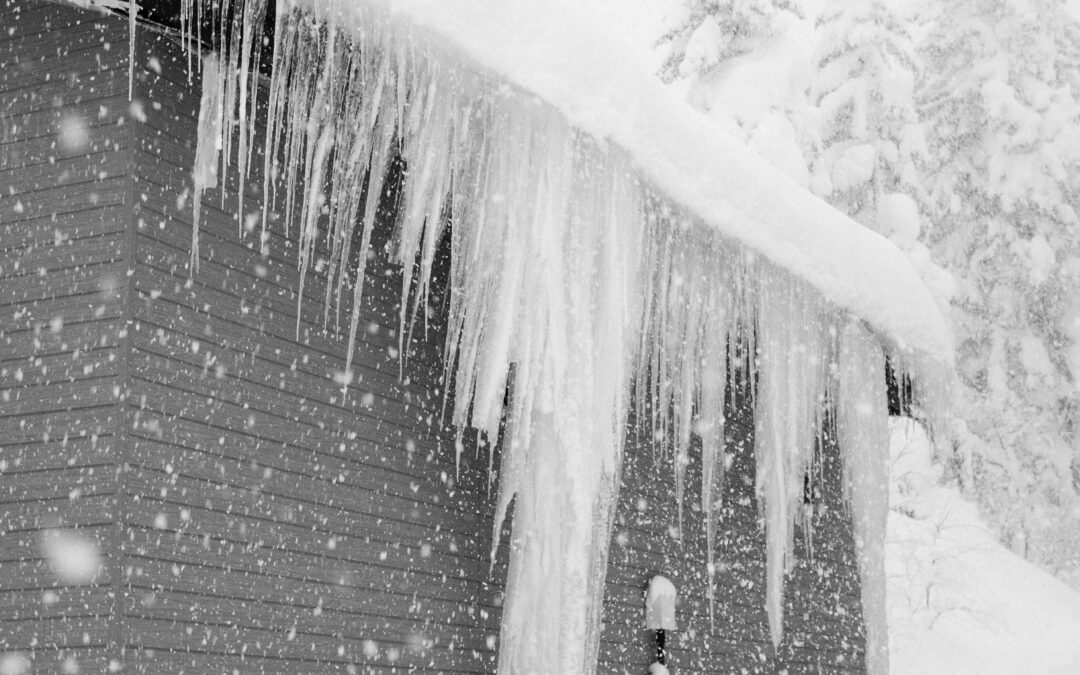
If you’ve lived through a Maine winter, you’ve probably seen ice dams. Those thick ridges of ice that build up along the edges of a roof, sometimes growing into massive formations that hang over the eaves like frozen waterfalls. They might look dramatic, but they’re a sign of a problem inside your home — and they can cause real damage if left unaddressed.
At Horizon Homes, we see ice dam damage in homes across Greater Portland every single winter. Stained ceilings, peeling paint, rotting fascia boards, water pooling in attic insulation. The damage is frustrating, but what’s more frustrating is that most homeowners spend years treating the symptoms instead of fixing the cause.
Here’s what’s actually going on, and what you can do about it — permanently.
The Science Behind Ice Dams
An ice dam forms when heat escapes from your living space into the attic, warming the roof deck from below. Here’s the sequence:
- Heat leaks into the attic. Through gaps around light fixtures, plumbing penetrations, the attic hatch, and poorly insulated ceilings, warm air from your home rises into the attic space.
- The roof warms unevenly. The middle and upper sections of the roof — directly above the heated attic — get warm enough to melt the snow sitting on top, even when the outdoor temperature is well below freezing.
- Meltwater flows downhill. The snowmelt trickles down the roof under the snow layer above.
- It refreezes at the eaves. The eaves (the overhanging edges of the roof) aren’t above heated space. They stay cold. When the meltwater reaches this cold zone, it freezes into ice.
- The dam grows. As this cycle repeats day after day, the ice ridge gets bigger. Eventually, water backs up behind the dam and can seep under shingles, into the roof deck, and down into your walls and ceilings.
The key takeaway: ice dams are not a roof problem. They’re an attic problem. Specifically, they’re caused by heat loss from your living space into your attic.
Why the Common “Fixes” Don’t Work
Most homeowners try one or more of these approaches before discovering the real solution. None of them address the root cause.
Roof Raking
Pulling snow off the lower few feet of your roof with a long-handled rake can prevent immediate damage, but it’s a band-aid. You’re out there after every storm, in the cold and dark, scraping at your roof. It doesn’t stop heat from escaping into the attic, and it can damage shingles over time. It also does nothing for the sections of roof you can’t reach.
Heat Cables (De-Icing Cables)
Those zigzag wires you see on roofs are designed to melt channels through the ice so water can drain. In practice, they’re expensive to run (they use a lot of electricity), they only protect a narrow strip of roof, and they often just move the ice dam to a different location. They also do nothing to address why the ice is forming in the first place.
Calcium Chloride / Ice Melt
Filling a stocking with ice melt and tossing it on the roof is a popular internet tip. It can melt a channel through a small dam, but it’s a temporary measure at best. It can also stain your roof and damage gutters. And again — it doesn’t address the cause.
New Roofing or Ice and Water Shield
When it’s time for a new roof, your roofer may install ice and water shield membrane along the eaves. This is smart — it provides a waterproof barrier that protects against leaks when ice dams do form. But it doesn’t prevent ice dams. It just limits the damage. If heat is still escaping into the attic, ice will still build up on the roof.
The Real Fix: Air Sealing and Insulation
If ice dams are caused by heat leaking into the attic, the permanent solution is to stop that heat from getting there. That means two things, done in the right order:
Step 1: Air Sealing the Attic Floor
Before adding insulation, the gaps and penetrations in the attic floor need to be sealed. This is the most important step, and it’s the one that gets skipped most often.
In a typical older Maine home, the attic floor is full of holes you can’t see from below:
- Gaps around electrical wires and plumbing pipes where they pass through the ceiling
- Open tops of interior walls (balloon-framed homes are especially leaky)
- Recessed light fixtures that vent warm air directly into the attic
- Unsealed attic hatches and pull-down stairs
- Gaps around chimneys and flues
- Bathroom exhaust fans that vent into the attic instead of outside
Sealing these gaps with caulk, foam, and appropriate fire-rated materials creates a continuous air barrier between your living space and the attic. This stops the warm, moist air that drives ice dam formation.
Step 2: Insulating the Attic Floor
With the air barrier in place, the next step is bringing the attic insulation up to current standards. In Maine’s climate zone (Zone 6), the recommended level is R-49 to R-60 — roughly 14 to 17 inches of blown cellulose insulation.
Many older homes in the Portland area have 3 to 6 inches of old fiberglass batts in the attic, providing R-11 to R-19. That’s a fraction of what’s needed. Blown-in cellulose fills the cavities completely, conforms around obstacles like wiring and pipes, and provides excellent thermal performance.
The result: the attic stays cold in winter (which is what you want), the roof stays cold, snow stays frozen on the roof, and ice dams don’t form.
How Do You Know If Your Home Is at Risk?
If you see any of these signs, your attic is likely losing heat:
- Ice dams form on your roof (obviously), even modest ones
- Icicles hanging from the eaves — a milder version of the same problem
- Snow melts unevenly on your roof — bare patches or thin spots in the middle while the eaves stay snow-covered
- Your upstairs rooms are colder than downstairs — heat is escaping upward
- Your heating bills seem high for the size of your home
- Your home was built before 1990 and hasn’t had insulation work done
Homes with complex roof geometries — Cape Cods, gambrels, dormered Colonials — are especially prone to ice dams because they have more intersections between heated and unheated space.
What About Attic Ventilation?
Good attic ventilation (soffit vents, ridge vents) helps keep the attic cold and is an important part of a healthy roof system. But ventilation alone won’t solve an ice dam problem if the attic floor is leaking air and heat. Think of it this way: ventilation is designed to flush out small amounts of heat and moisture. If your attic is getting a steady stream of warm air through unsealed gaps, no amount of ventilation can keep up.
The best approach is to seal and insulate first, then ensure ventilation is adequate.
Maine Rebates Help With the Cost
Here’s the good news: Efficiency Maine offers significant rebates for attic air sealing and insulation work. Depending on income eligibility and the scope of the project, homeowners can receive thousands of dollars back, making this work far more affordable than most people expect.
When you consider that the average Maine homeowner spends $2,500 to $4,000 per year on heating, and that proper air sealing and insulation can reduce that by 25-40%, the payback is often just a few years.
Don’t Wait for Next Winter
Most people think about ice dams in January, when they’re staring at a wall of ice on their roof. But the best time to fix the problem is before winter arrives. Air sealing and insulation work can be done year-round, but scheduling is easiest in late summer and fall.
If you dealt with ice dams last winter — or if you’ve been dealing with them for years — this is the year to solve it for good. Not with heat cables or roof raking, but by fixing what’s actually causing the problem.
Stop Fighting Ice Dams Every Winter
Horizon Homes has been solving ice dam problems in southern Maine homes since 2006. A free energy assessment will show you exactly where your attic is losing heat and what it will take to fix it — including rebate estimates from Efficiency Maine.
Or call us at (207) 221-3221. We serve Portland, South Portland, Westbrook, Scarborough, Gorham, Windham, Falmouth, Cape Elizabeth, and communities throughout Greater Portland.